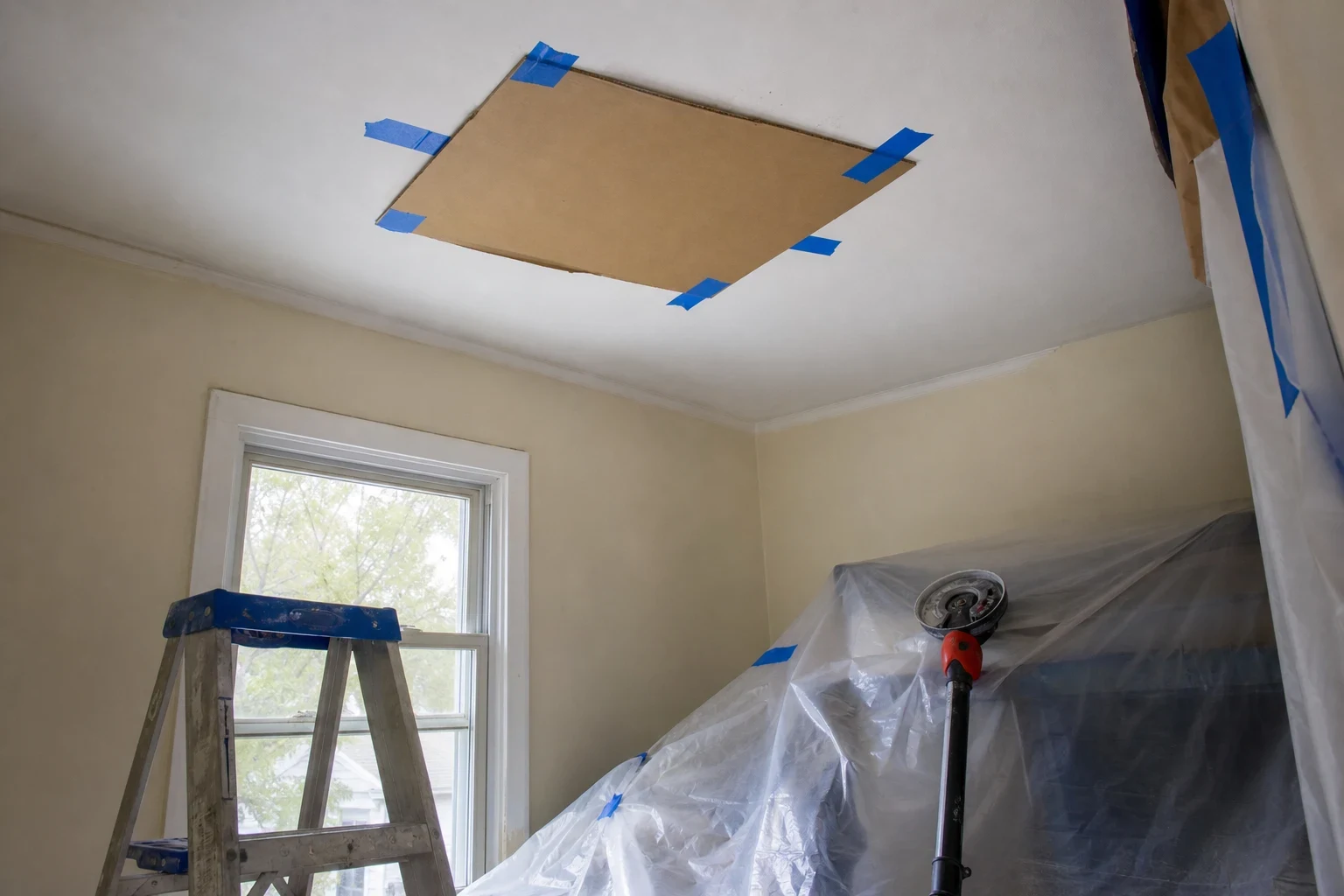
How Do You Cover a Hole in the Ceiling Temporarily in New Rochelle?
A good temporary cover keeps dust, drafts and falling bits out of the room and stops a small hole from turning into a bigger one before the real repair.
How to cover a hole in the ceiling temporarily?
Cut a piece of cardboard, foam board or thin plywood a few inches larger than the hole, then hold it in place with painter's tape for small holes or drywall screws into the joists for bigger ones. Before you cover anything, make sure the area is dry, the edges are not sagging and nothing above is still leaking.
Is it safe to cover the hole yet?
Look before you patch. A cover hides the problem, so you want to know what you are hiding. Shine a flashlight up into the hole and press gently on the ceiling around it with your palm.
If the board feels soft, bows down or shows a brown ring, water is involved. Covering a wet ceiling traps the moisture, and the drywall around it keeps breaking down out of sight. Get the source fixed and let things dry first.
- Wet, soft or stained edges: wait, and set a bucket under it
- Ceiling bulging or sagging: keep people out of the room and do not push on it
- Wires visible in the hole: turn off that circuit at the panel before you work near it
- Loose insulation hanging down: wear gloves and a dust mask
- Edges dry, firm and clean: you are fine to cover it
Covering a small hole
For a hole a few inches across, like one from a light fixture swap or a dropped tool, keep it simple. Cut a square of stiff cardboard or poster board an inch or two bigger than the hole on every side. Tape all four edges to the ceiling with painter's tape.
Painter's tape matters here. Duct tape and packing tape grip the paint and pull it off when you remove them, which adds to the repair later. A self-adhesive mesh patch from the hardware store also works on small holes and can stay up a while, but it will not look finished without mud and sanding.
Covering a larger hole
Once a hole gets bigger than your hand, tape will not hold a board for long. Use a scrap of thin plywood, hardboard or a piece of drywall. Find the ceiling joists on either side with a stud finder, cut your cover wide enough to reach them, and drive two or three drywall screws into each joist.
If the hole is ragged or insulation keeps sifting down, staple a sheet of plastic over the opening first, then screw the board over it. That keeps dust out of the room and cold air from the attic out of your living space, which helps a lot in a Westchester winter.
Do not screw into crumbling edges. Screws need solid framing behind them, or the cover will drop.
- Stud finder or a thin nail to probe for joists
- Board cut to span from joist to joist
- Drywall screws and a drill
- Plastic sheeting and a staple gun for messy holes
- Safety glasses, since debris falls straight down at you
What if the hole came from a leak?
Water is the most common reason a ceiling gives way. A slow drip from a bathroom or a radiator line upstairs soaks the drywall until it softens and sags. Fix the leak first, or have whoever handles it come out. Any cover you put up before then is just a lid on a wet sponge.
Give the area time to dry with a fan and some air moving through the room. Older homes around here often have plaster and lath ceilings, and wet plaster can let go in heavy chunks, so keep furniture and people out from under it until it is firm again. Once it is dry, cover the hole the same way as above.
How long can a temporary cover stay up?
Think in days or a few weeks, not months. Tape dries out and lets go. Cardboard droops in summer humidity. Meanwhile the raw edges of the hole keep crumbling a little each time the house shifts or a door slams upstairs.
The real fix is what keeps the ceiling sound for years. We cut the damage back to solid material, add backing where the board needs support, and fasten new drywall to the framing. Then we tape, apply joint compound in thin coats, sand, match the texture to the rest of the ceiling and finish with a paint touch-up so the patch does not show. We protect the floor and furniture, and we leave a clean work area when we pack up.
Fixing it sooner usually means a smaller repair. A neat hole with firm edges is a simple patch. A hole that has spread or stayed damp can mean replacing a larger section.
More questions about temporary ceiling covers
Can I just use duct tape over the hole?
It will hold for a little while, but it pulls paint and paper off the ceiling when it comes down. Painter's tape or screws into the joists are easier on the surface around the hole.
Should I fill the hole with spray foam to hold it over?
No. Foam expands past the hole, is hard to cut back cleanly and has to come out before a proper patch goes in. A flat cover is easier to remove.
Is it okay to sleep in a room with a covered ceiling hole?
If the ceiling around it is dry, firm and not sagging, a secured cover is fine. If the area is soft or bulging, use another room until it is repaired.
Will the repaired spot match the rest of my ceiling?
That is the goal of texture matching and finishing. We blend the patch into the surrounding surface and touch up the paint so it reads as one ceiling.
Turn the temporary fix into a lasting one
Tell us how big the hole is and what caused it. We will walk you through what the ceiling repair involves and how we would handle it, and you can get your quote by phone.