ServicesPainting After Repairs
Painting After Drywall Repair in New Rochelle
A good drywall repair is only half done until it is primed and painted. We seal the new compound, then paint the whole wall or ceiling we worked on, so the patch disappears and the surface is protected for the long haul.
Why the paint is part of the repair
Fresh joint compound is soft and thirsty. Left bare, or painted with one quick coat, it soaks up paint differently than the wall around it. You end up with a dull spot that shows every time the light hits it. Worse, the patch stays easy to dent and stain.
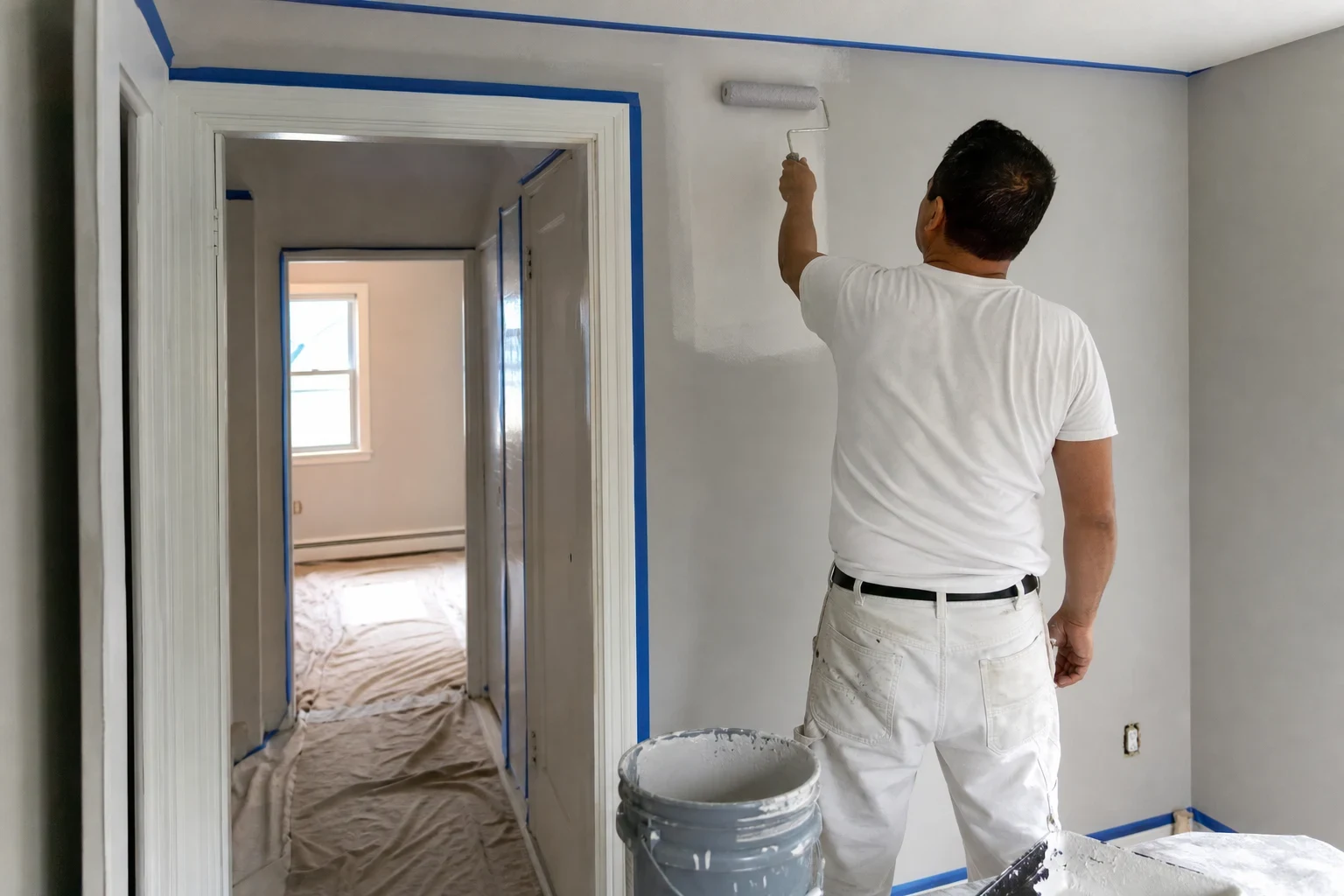
So when we fix drywall in your home, we finish the job with primer and paint on the walls and ceilings we repaired. We paint from corner to corner, not just over the patch. That is what makes a repair blend in and last.
What this work includes
Primer on every repair
We put a sealing primer over new compound and bare paper. It locks down the surface and keeps the topcoat from flashing.
Full wall, corner to corner
A spot of new paint on an old wall almost never matches, even from the same can. We roll the full wall or ceiling plane so the sheen is even.
Cut lines at trim and ceilings
We brush clean lines where the wall meets trim, ceilings and the next wall. Straight edges make the room look finished.
Two coats where they are needed
Most repaired walls need two finish coats to cover primer and hide the patch. We do not stretch one coat thin to save time.
Protection and cleanup
Floors get drop cloths and furniture gets moved or covered. We leave a clean work area and take our debris with us.
Signs your repaired wall needs proper paint
A patch you can still see
If a past repair shows as a shiny or flat square, it was likely painted without primer. Repainting the full wall fixes it.
Bare compound left behind
Maybe someone patched the hole and never came back. Unsealed compound picks up dirt and dents fast.
Ceiling repair after a leak
Water stains bleed through regular paint. The ceiling needs a stain-blocking primer before the finish coat.
Paint that peels near a repair
Peeling around a patch often means paint went over dust. We sand, clean and prime so the new coat holds.
How the job goes
- 1
Check the repair
We make sure the drywall work is fully dry and smooth. Paint shows every flaw, so we fix those first.
- 2
Prep the room
We cover floors, move what we can and tape off trim. Outlet covers come off.
- 3
Prime
New compound and any stains get primer. We let it dry before moving on.
- 4
Paint and clean up
We cut in, roll the full wall or ceiling and add a second coat if needed. Then we put the room back and walk it with you.
What moves the price
We price after we see the wall and the repair it needs. The painting is quoted along with the drywall work, line by line, so you know what each part costs. Here is what changes the number.
- Size of the surface
- Painting one wall costs less than a full ceiling or several walls. The repair may be small, but we still paint the whole plane.
- Height and access
- Tall ceilings and stairwells need ladders or planks and take longer. Furniture that has to be moved adds time too.
- Stains and old finishes
- Water stains, smoke or glossy old paint need special primer. That adds a step and material.
- Paint you supply or we supply
- If you have the original paint, we can use it. If we need to match a color, that adds a trip and material cost.
Questions about painting repaired walls
Something not covered here? (914) 730-4312
Why can't you just paint over the patch?
Because it will show. Old paint has faded and the new paint sits on a different surface. Painting the whole wall to the corners gives one even color and sheen.
Do I need to have the old paint?
It helps, but it is not required. If you have the can, we use it. If not, we can match the color from a chip of the wall.
How long before I can use the room?
Most rooms are usable the same evening once the paint is dry to the touch. We suggest waiting a few days before scrubbing the wall or hanging heavy pictures back up.
Will the ceiling stain come back?
Not if the leak is fixed and we use a stain-blocking primer. Regular paint alone lets the stain bleed through, which is why we never skip that step.
What paint finish lasts best?
For most walls, an eggshell or satin finish wipes clean and hides small flaws. Ceilings usually look best in flat. We can talk through what fits each room when you call.
Finish the repair the right way
Tell us about the wall or ceiling and what happened to it. We will explain the repair, the primer and the paint, and get your quote by phone.