ServicesPaint Touch-Ups
Paint Touch-Ups in New Rochelle
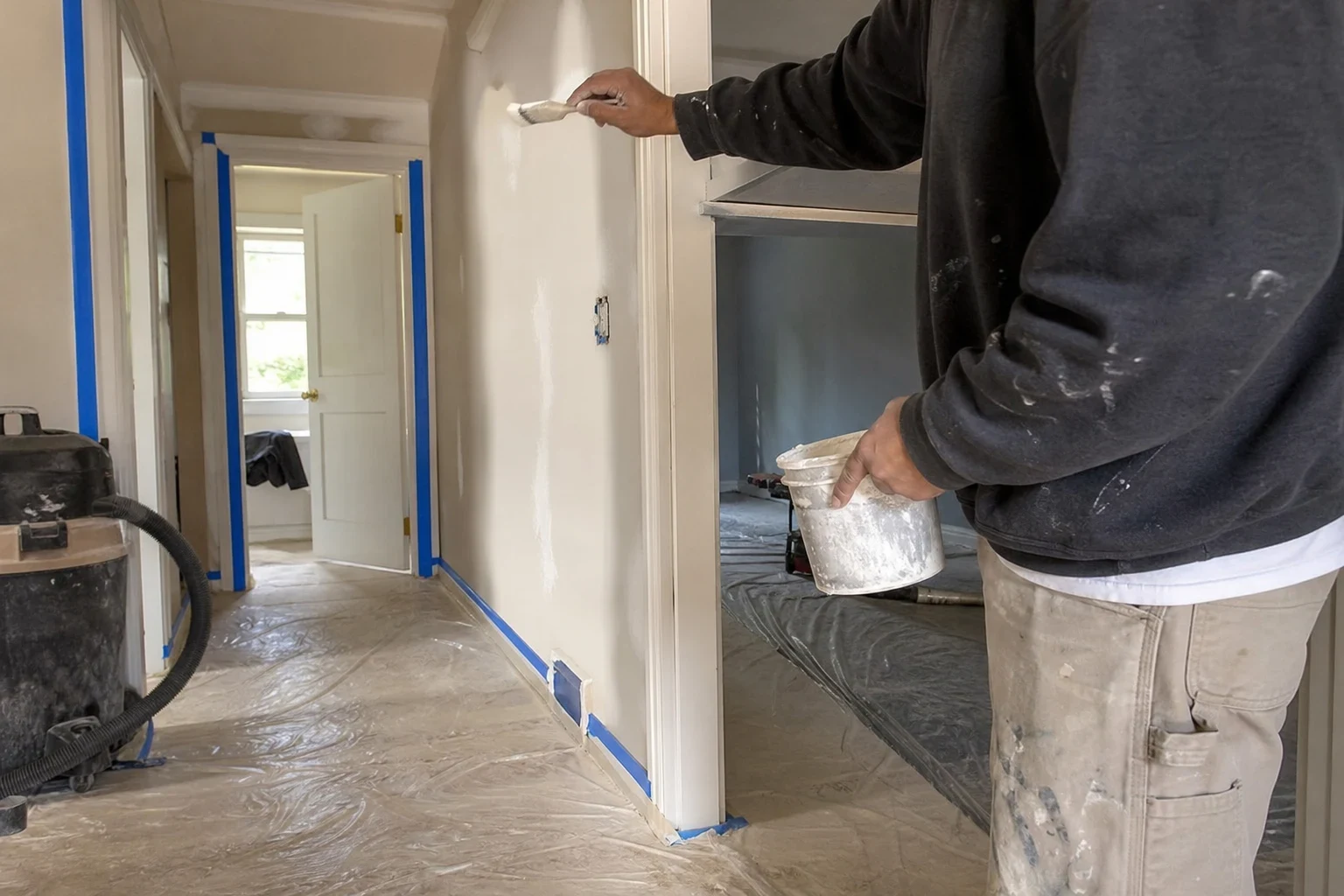
Even a well-done patch shows when the paint on top dries a shade off or shines in the light. We prime the repair, match your color and sheen, and feather the edges until the spot blends in. Small fixes like this keep walls in good shape for years.
What a Paint Touch-Up Really Takes
Most people think a touch-up is a dab of paint from the can in the basement. Sometimes it is. More often the spot dries a shade off, or it shines when the light hits it from the side. That shiny patch is called flashing, and it happens when fresh paint goes over bare joint compound or when the sheen doesn't match.
We do paint touch-ups as the last step after drywall patching and wall repair, and as a stand-alone job for scuffs, marks and old repairs that never quite disappeared. The goal is simple. You should not be able to find the spot from across the room.
Keeping up with small marks and dings is cheaper than letting them pile up. A wall that gets a few careful touch-ups now can go a lot longer before it needs bigger work.
What's Included in a Touch-Up Visit
- 01
Spot priming over repairs
Fresh joint compound soaks up paint differently than a painted wall. We seal it with primer first, so the finish coat dries even and doesn't flash.
- 02
Color and sheen matching
If you have the leftover can, we check it against the wall. If not, we take a small sample from a hidden spot and get it matched. Flat, eggshell, satin and semi-gloss all reflect light differently, so we match the sheen too.
- 03
Feathered edges
We roll or brush out past the repair and thin the paint at the edges. A hard edge is what gives most touch-ups away.
- 04
Matching the roller texture
Walls rolled years ago have a light stipple from the roller nap. We use a similar nap so the new paint has the same surface, not a smooth square in the middle of a textured wall.
- 05
A clean work area
We cover floors and furniture near the spots we're working on and pick up when we're done. You get the room back the way you left it.
Questions about Paint Touch-Ups?
Call(914) 730-4312Signs Your Walls Need Paint Touch-Ups
A patch you can still see
The hole is fixed but you can see a dull square or a shiny halo around it. That usually means the patch was never primed or the sheen is off.
Scuffs in busy spots
Hallways, stairways and the wall behind chairs take a beating. Scuffs and rub marks build up until the wall looks tired even though nothing is broken.
Nail pops and screw heads
Small round bumps show up as framing shifts with the seasons. Once we reset and fill them, they need paint to vanish.
Marks left from old hardware
Taking down shelves, TV mounts or curtain rods leaves holes and outlines. After the holes are filled, the paint has to match the rest of the wall.
Earlier touch-ups that don't match
If someone already tried and the color is a little off, we can correct it. Sometimes that means carrying the paint to the nearest corner so there's no edge to see.
How the Work Goes on the Day
- 1
Walk the room with you
We look at each spot in daylight and with the lights on. We tell you which ones will blend well and which may need paint carried out to a corner.
- 2
Fix and prep the surface
Dents, holes and cracks get filled and sanded first. A touch-up only looks as good as the surface under it, so we handle any surface preparation and sanding before paint goes on.
- 3
Prime, then paint
Repairs get a coat of primer. Once it's dry, we apply the matched paint with the right roller or brush and feather it out.
- 4
Check it and clean up
We look at the work from a few angles once it starts to dry, add a second coat where it's needed, and clean up the work area before we leave.
What Moves the Price of Touch-Ups
Touch-ups are usually a small job, but no two are quite the same. The price depends on how many spots there are, what shape they're in, and how hard the paint is to match. We go over all of it on the phone and again when we see the walls.
- Number and size of spots
- A few nail holes in one room is quicker than marks spread across a whole floor. Grouping them into one visit keeps the cost down.
- Repairs needed first
- If the wall has dents, cracks or loose tape, that work comes before paint. Bigger damage may fall under drywall repair instead.
- Paint matching
- Having the original can with the color name helps. Without it, we need a sample and a custom match, which adds a step.
- Height and location
- Ceilings and stairwell walls take ladders or planks and more setup. Ceiling spots are also harder to blend because of how light hits them.
- Sheen and coats
- Glossy paints show every mistake and often need a wider area or a second coat. Flat paint is the most forgiving.
Paint Touch-Up Questions
Do I need the original paint can?
It helps, but you don't need it. The label tells us the brand, color and sheen. If the can is gone, we take a small chip from an out-of-the-way spot and get it matched.
Why does my touch-up look shiny?
That's flashing. It happens when paint goes over unprimed joint compound or when the sheen is different from the wall. We prime first and match the sheen to avoid it.
Will a touch-up match paint that's ten years old?
Old paint fades and picks up dirt, so even the same can may look a little different now. If a spot won't blend, we tell you before we start. Often the fix is to carry the paint to the nearest corner or break in the wall.
Can you touch up ceilings too?
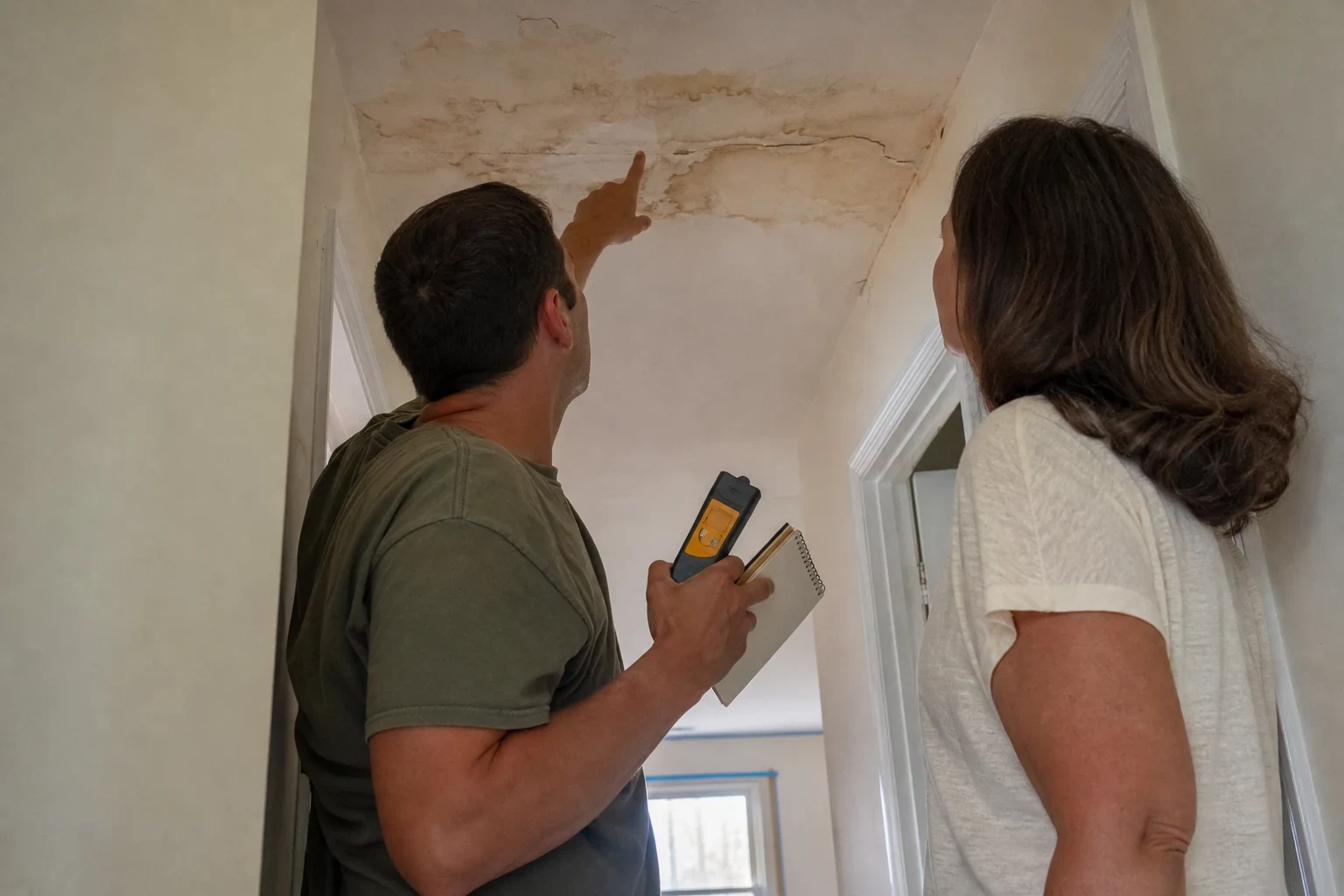
Yes. Ceilings are trickier because light rakes across them, so we take extra care feathering the edges. If there's a water stain, we seal it with a stain-blocking primer first. Bigger ceiling damage is handled as ceiling repair.
How soon can I use the room again?
Most touch-ups are dry to the touch within a few hours. We'd wait a day or two before hanging pictures or pushing furniture back against the wall.
Get Those Spots Taken Care Of
Tell us what you're seeing and how many rooms it's in. We'll talk through the work and set a time to come out to your home in New Rochelle or nearby.