ServicesDrywall Patching
Drywall Patching in New Rochelle
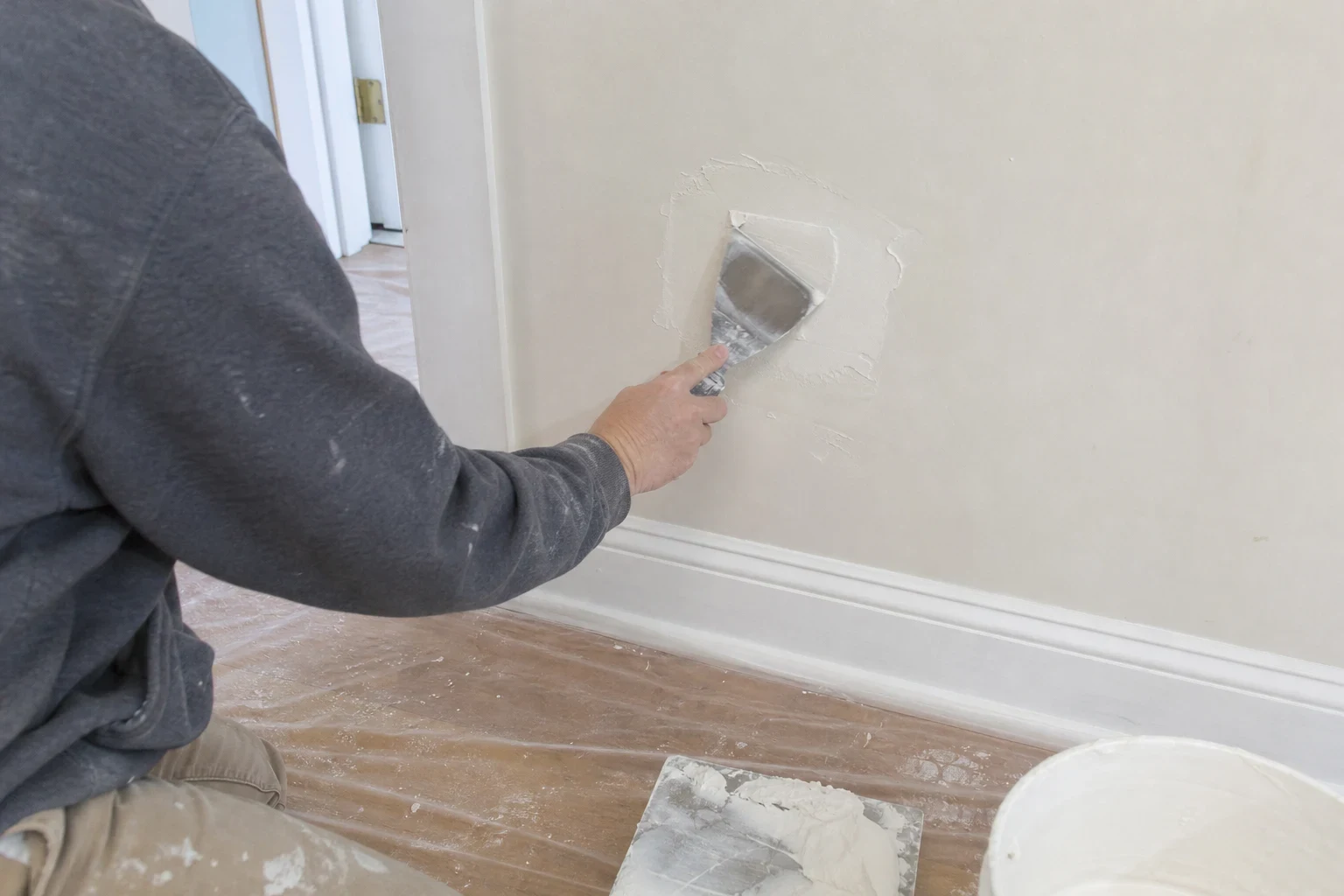
We patch holes, dents and cut-outs in walls and ceilings so they stay fixed. Each patch gets cut back to solid board, backed, taped and sanded smooth, then texture matched and primed. You get a wall that's ready for paint and a spot that won't crack again next winter.
What drywall patching covers
Patching fixes a defined damaged spot in a wall or ceiling that is otherwise sound. Think doorknob holes, old anchor and TV mount holes, a cut-out left after an electrician fished a wire, or a dent from moving day. We cut back to solid board, add backing or a new piece, then tape, mud, sand and prime.
A patch is upkeep. An open hole doesn't stay small. The paper edges peel, the gypsum crumbles, and the next bump turns a dime-sized ding into a section that needs new board. Fixing it early keeps the original wall in service for years and costs less than replacing it later.
If the damage runs across a whole wall or came from a leak, our drywall repair or ceiling repair pages are a better fit. We'll tell you on the phone which one your job needs.
What goes into every patch
Cutting back to sound board
We trim away torn paper and soft gypsum and square up the opening. A patch is only as strong as the edge it bonds to.
Backing and new board
Larger holes get wood or metal backer strips behind them and a new piece of drywall screwed in place. Small holes get mesh or a solid fill of setting compound.
Setting compound and tape
Our first coat is setting-type compound. It cures harder and shrinks less than premixed mud, so the patch doesn't sink or crack along the seam.
Feathered coats and sanding
Each coat goes on thin and wider than the last, with sanding between. That keeps a hump from showing when light hits the wall at an angle.
Texture matching and primer
We match smooth, orange peel or knockdown finishes, then prime the patch so fresh mud doesn't flash through your paint. A paint touch-up can be added if you want the spot fully finished.
A clean work area
Floors get drop cloths and nearby furniture gets covered. We vacuum the dust before we leave.
Signs a spot needs patching
A doorknob hole behind a door
Once the knob breaks through, every swing makes it worse. A patch plus a door stop ends it.
Holes left from a TV mount or shelves
Pulled anchors leave ragged, raised holes. Spackle alone tends to crack or pop out of those.
Cut-outs after electrical or cable work
Access holes are often left open or covered with tape. They need a real piece of board and a finished seam.
An old patch that shows
A ring, a bulge or a hairline crack around an earlier fix means it wasn't backed or feathered right. We cut it out and redo it.
Torn face paper or gouges
Peeled paper from tape, removed fixtures or furniture scrapes will bubble under paint unless it's sealed and skimmed first.
How a patching job runs
- 1
Start with a phone call
Tell us how many spots there are, roughly how big, and whether they're on walls or ceilings. We'll give you an idea of the work and set a time.
- 2
Look it over and set up
On the day we check each spot, point out anything bigger than it looked, and lay down drops and plastic before any cutting starts.
- 3
Cut, back and set the first coat
We open each hole to solid board, add backing or new drywall, and tape it in setting compound. That compound cures on a set clock, so later coats can often follow sooner than with standard mud.
- 4
Sand, texture, prime and clean
After the final coat dries we sand it flat, match the texture and prime. Then we pick up the plastic, vacuum, and walk you through what was done.
What moves the cost of a patch
Most patching is priced by the job, not the hour. The number of spots and how far apart they are matter more than the size of any one hole. We give you the price by phone before work starts, and we tell you if something we find changes it.
- Number and size of patches
- Several small holes in one room take less time than the same number spread across a house. A hole that needs new board takes more than a nail hole.
- Walls versus ceilings
- Ceiling patches mean ladders, more setup and slower sanding overhead. High stairwell walls add the same.
- Texture
- Smooth walls are the quickest to blend. Orange peel and knockdown take extra steps and test sprays to match.
- What's around the hole
- Loose tape, soft board or an old failed patch nearby means a bigger cut. We show you what we find before going further.
Drywall patching questions
Something not covered here? (914) 730-4312
Will I be able to see the patch after painting?
On a well-feathered, primed patch, you shouldn't. Most visible patches come from skipping primer or leaving a ridge at the edge. We check ours with a light held flat to the wall before we call it done.
How soon can the patched area be painted?
Once the last coat and primer are fully dry. That's usually within a day, though damp weather can slow it. We'll tell you when it's ready on your job.
Can you patch plaster walls?
Many older homes in the area have plaster. Small holes in plaster can often be patched with the right materials. Larger or loose plaster sections are covered on our wall repair page, and we'll tell you which applies.
Should I patch it or replace the whole section?
If the board around the hole is firm and dry, a patch is the right call and keeps the original wall in use. If it's soft, stained or crumbling across a wide area, replacing that section will last longer. We'll give you a straight answer after we see it.
Do I need to move furniture first?
Clearing a few feet in front of each spot helps. We cover what's left and protect the floors ourselves.
Fix the hole before it grows
A small patch now saves a bigger repair later. Tell us what you've got and where, and we'll explain the work and the price.