ServicesDrywall Finishing
Drywall Finishing in New Rochelle
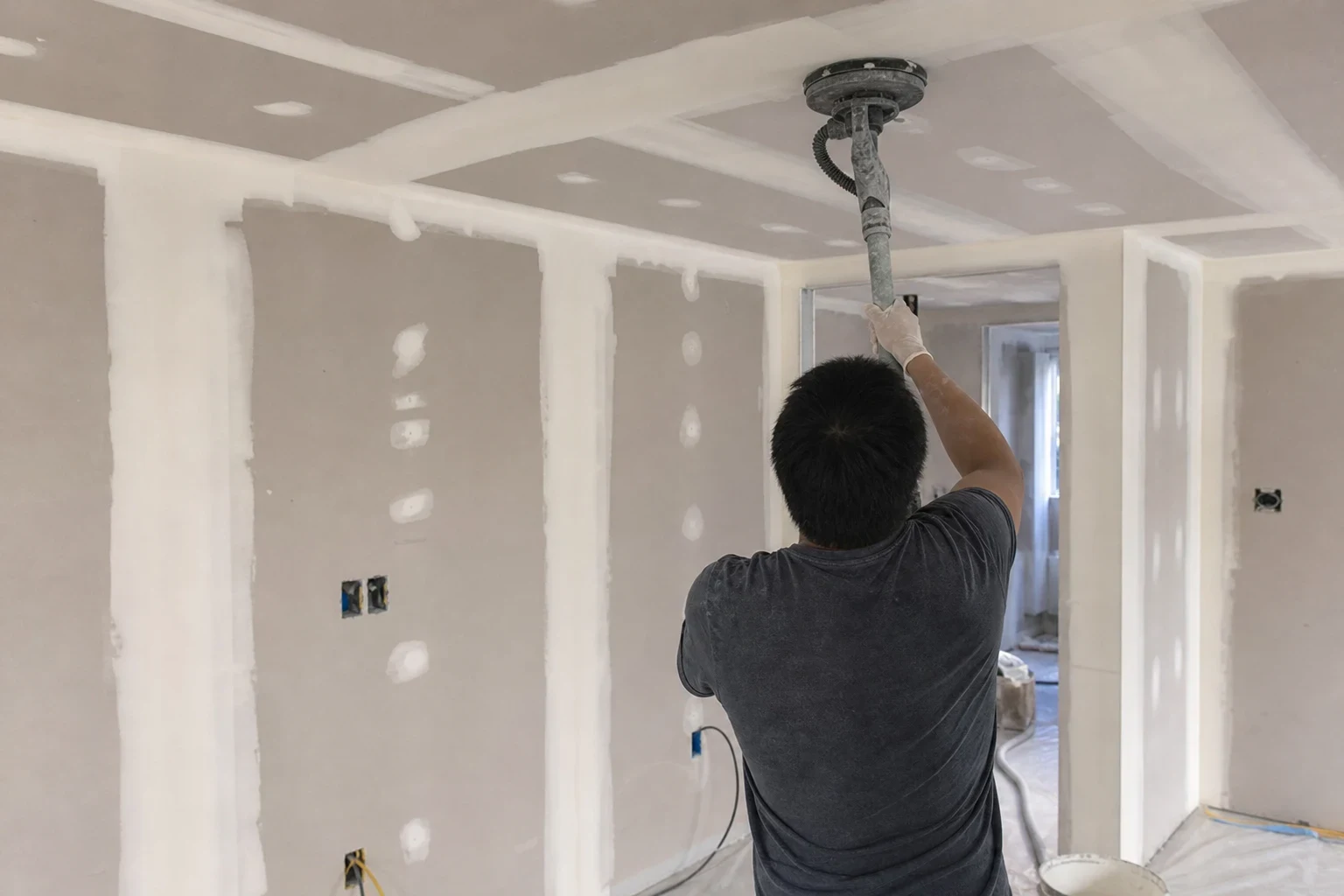
We tape, mud and sand new or repaired drywall until the seams disappear and the wall is ready for primer. A finish done carefully holds up for years, so we take our time on each coat instead of rushing to the next room.
What finishing does for your walls
Hanging drywall gets the boards onto the studs. Finishing is everything after that: bedding tape in the joints, covering screws, setting corner bead and building up thin coats of joint compound until the wall reads as one flat surface. It is slow work, and it decides most of how the room looks.
Rushed finishing shows up later. Tape without enough mud under it bubbles or cracks. Thick coats shrink and leave ridges. Joints that were not feathered wide cast a shadow when light hits the wall from the side. We keep each coat thin and let it dry fully, so the finish lasts through years of seasonal swings instead of needing a redo in two winters.
Call us after new drywall hanging, after a larger drywall repair, or when an old finish job has started to show its seams.
What our finishing work covers
Bedded tape on every joint
We embed paper tape in a full bed of compound on flat seams and pick paper or mesh for inside corners as the joint calls for. Tape that is set properly does not lift later.
Straight corner bead
Outside corners get metal or paper-faced bead set plumb and covered with compound. A solid bead takes bumps from furniture and vacuums without denting.
Fastener coverage
Every screw head gets at least two passes of mud so it does not ghost through the paint.
Wide, feathered coats
Each coat runs wider than the last so the joint blends into the board around it. Most walls get three coats. Walls under strong window light may need more.
Skim coat for a smooth finish
When you plan on glossy paint or the wall gets raking light, we skim the whole surface with a thin coat of compound. That way the paper face and the taped joints take paint the same and the wall reads as one even surface.
Sanding and a clean work area
We sand between and after coats, protect floors and furniture, and clean up dust before we leave. Texture matching is available where new work meets an existing textured wall.
Signs your walls need finishing work
Seams showing through paint
You can see lines or raised strips where boards meet, most often when sunlight comes across the wall.
Cracked or lifting tape
Hairline cracks along joints, or tape peeling at corners, usually mean the tape was not bedded well. Dry winter heat in New Rochelle tends to bring these out first.
Nail pops and screw dimples
Small bumps or round dents in a row along a stud line point to fasteners that were never covered right.
Bare drywall after a project
Boards were hung, by you or another contractor, and left untaped. Bare joints and exposed paper will not take paint well.
Chipped or dented corners
Outside corners that are crushed or missing bead keep getting worse with every knock.
How a finishing job runs
- 1
Look and plan
We look at the drywall, the lighting and the finish you want. Then we explain how many coats the job needs and how drying time affects the schedule. You get a written estimate by line item.
- 2
Protect the room
Drop cloths go down, plastic goes over doorways and vents, and furniture gets moved or covered. This keeps sanding dust out of the rest of your home.
- 3
Tape and first coat
We bed the tape, set corner bead and run the first coat over joints and screws. Then it has to dry before anything else happens.
- 4
Build and feather
Second and third coats go on during later visits, each one wider and thinner. Humid weather slows drying, and we do not sand mud that is still soft.
- 5
Sand, check and clean
We sand smooth, hold a work light flat against the wall to find low spots, and fix what it shows. Then we vacuum, wipe down and leave the wall ready for primer.
What affects the price of drywall finishing
We price finishing after we see the job. The number depends mostly on how much joint there is and how smooth the wall needs to be. Your written estimate lists each part, so nothing shows up later that you did not see first.
- Size and joint count
- More board means more seams, corners and screws to cover. A room full of small pieces has more joint than one with full sheets.
- Level of finish
- A standard finish for flat paint takes fewer coats than a full skim coat for gloss paint or raking light.
- Ceilings and tall walls
- Overhead work and stairwells need ladders or staging and go slower, which adds time.
- Fixing earlier work
- Loose tape, thick ridges or bad corners from a past job have to be cut out or knocked down before new coats go on.
- Return visits
- Drying time between coats means several trips. Bigger jobs can be staged so rooms are worked in turn.
Drywall finishing questions
Something not covered here? (914) 730-4312
How long does drywall finishing take?
Most jobs are spread over several visits because each coat has to dry before the next. The actual work time on site each day is often short. We give you the expected schedule with the estimate so you can plan around it.
Can you finish drywall that someone else hung?
Yes. We look at how the boards were hung first. If there are wide gaps, loose screws or broken edges, we point them out and fix them before taping so the finish does not crack later.
What level of finish do I need?
For most rooms with flat or eggshell paint, a standard finish over the joints is enough. If you plan on glossy paint, or a wall gets strong side light from a window, a skim coat over the whole surface hides the board texture. We tell you which one fits your room and why.
How much dust will there be?
Sanding makes fine dust, so we close off the room with plastic, cover vents and floors, and vacuum as we go. You will still want to keep doors to the work area shut while we are there.
Do I need to prime before painting?
Yes. Fresh joint compound and the paper face of drywall soak up paint differently, and without primer the seams can show as dull stripes. A coat of drywall primer evens that out.
Can you match the texture on my other walls?
In most cases, yes. We do texture matching for common finishes like orange peel and knockdown, and test it on a small spot so you can see it before we do the whole area.
Get your new drywall finished right
Tell us what was hung and the finish you are after. We will set a time to look at it and walk you through a written estimate.