ServicesCeiling Repair
Ceiling Repair in New Rochelle
Cracks, water stains, popped nails and sagging drywall are easier to fix early. We find out why the ceiling failed, repair it so it stays put, and match the finish so you stop noticing the spot every time you look up.
Fix the ceiling once, and keep it sound
Ceilings take a beating you do not see. Gravity pulls on every screw, framing shifts with the seasons, and a small leak upstairs can soak a panel long before it shows. A thin crack or a stain is usually the first sign. Caught then, it is a small job.
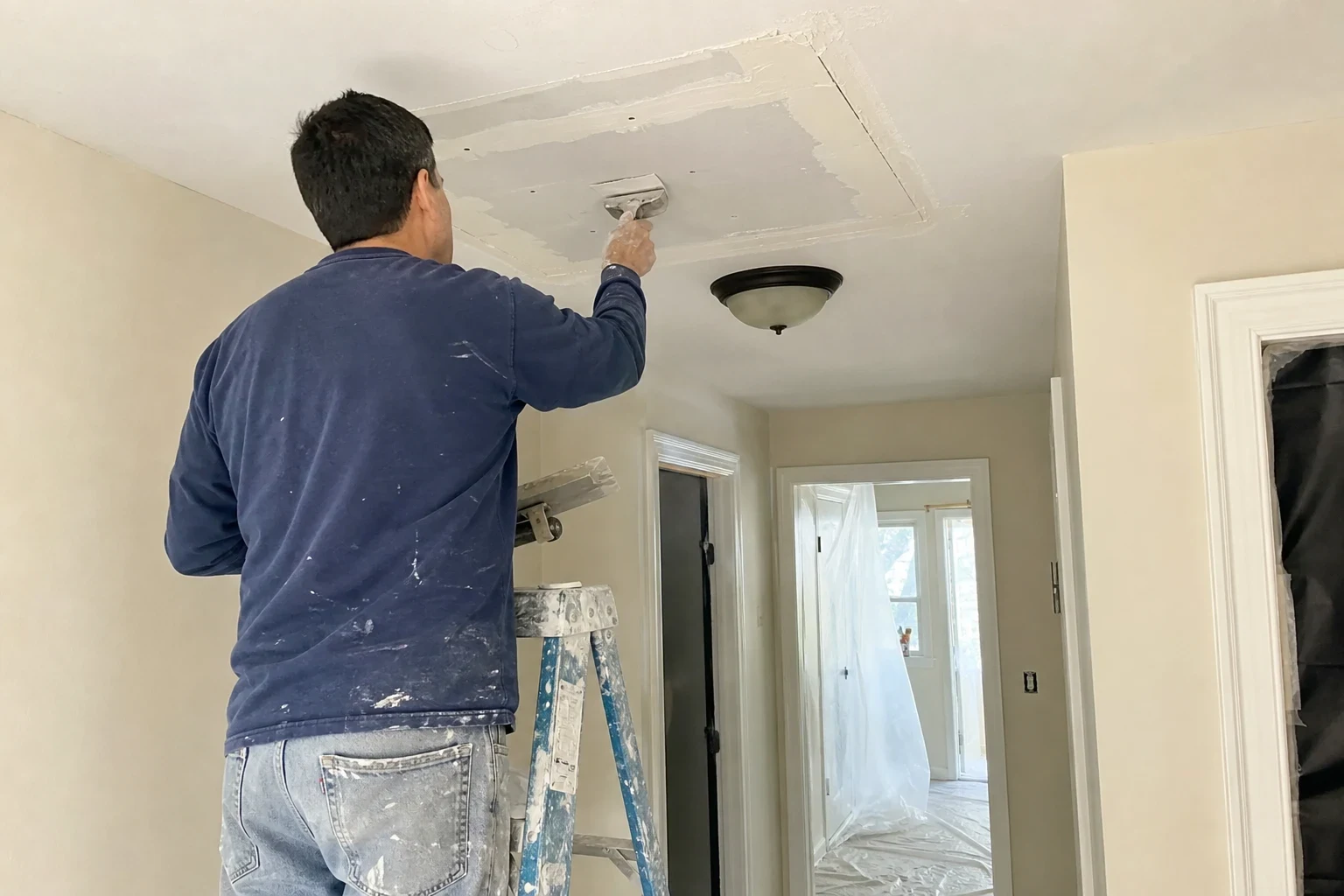
Our ceiling repair starts with the cause, not the cosmetic. If a seam is cracking because the tape let go, we re-tape it. If drywall is pulling off the joists, we re-fasten it before any mud goes on. That way the fix holds for years instead of showing up again next winter.
Many homes around New Rochelle and nearby towns like Pelham and Larchmont still have older plaster or early drywall ceilings. We repair both, and we tell you plainly when a section is worth saving and when it should be replaced.
What our ceiling repair covers
- Crack and seam repair
- We cut out loose tape, re-tape the joint and feather the compound wide so the line does not telegraph back through the paint.
- Re-securing sagging drywall
- Sagging panels get pushed back up and fastened to the framing with new screws. If the board is too soft or broken to hold, we replace that piece.
- Water-damaged sections
- Once the leak above is fixed and the area is dry, we cut out stained or crumbly drywall, install new board and finish it. We do not paint over a wet ceiling.
- Nail pops and holes
- Popped fasteners get reset and backed up with a screw. Holes from old fixtures, fans or smoke detectors get a proper patch.
- Texture matching
- Smooth, knockdown, orange peel or older swirl finishes. We test on a scrap first so the repair blends with the rest of the room.
- Clean work area
- Floors and furniture get covered, dust is kept down during sanding, and we clean up before we leave.
Signs your ceiling needs attention
A crack that keeps coming back
If someone caulked or painted over it and it reappeared, the tape or fasteners underneath have failed. Paint alone will not hold it.
Brown rings or yellow stains
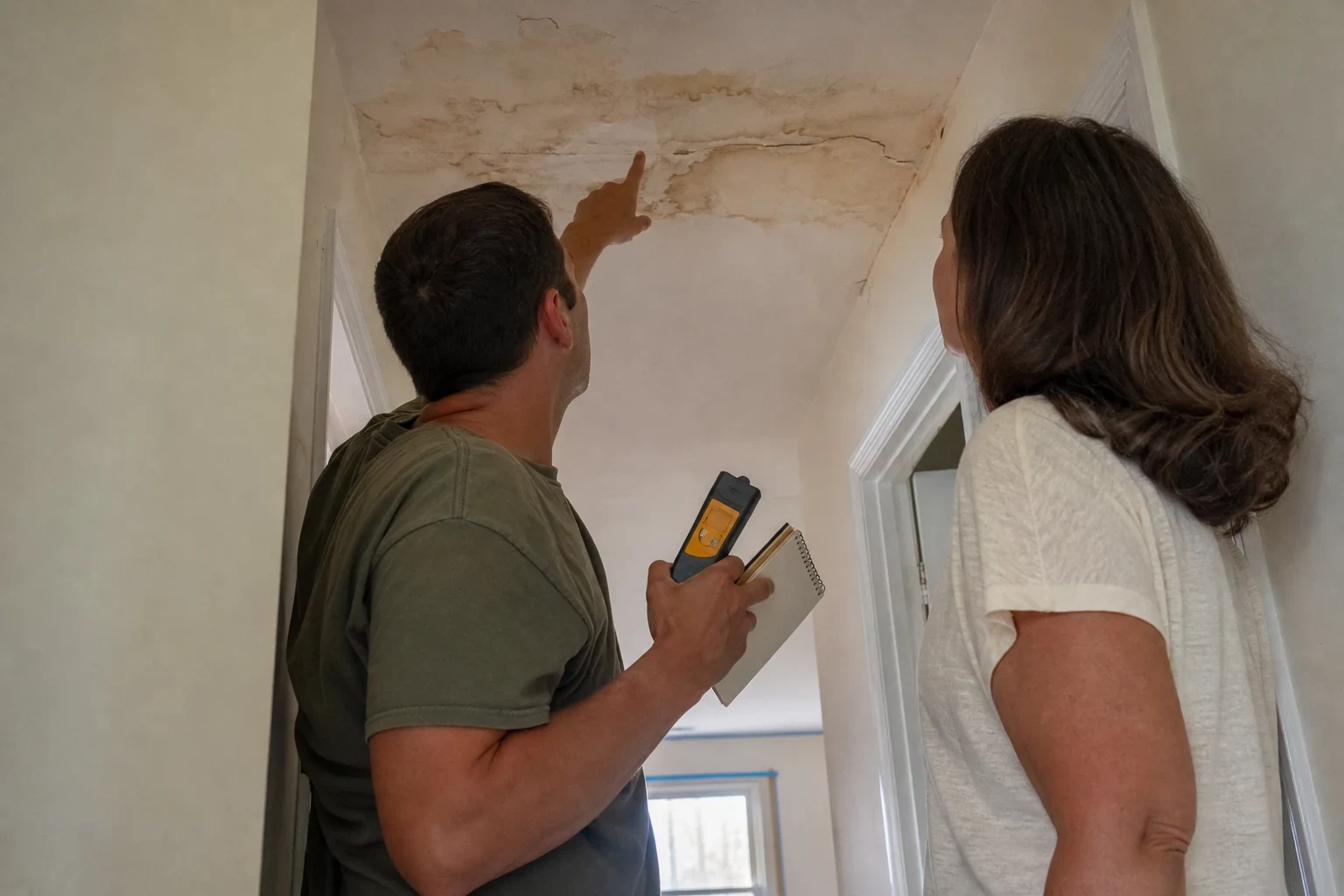
That is water. Even after the source is fixed, the drywall behind the stain may be soft and should be checked.
A dip or bulge you can see from across the room
Sagging means the board is pulling away from the joists or holding moisture. This is the one not to put off.
Small round bumps in a line
Those are nail pops along a joist. They are minor now, but they spread as the house moves.
Flaking or bubbling paint overhead
Often a sign of moisture or a poor bond under the paint. We scrape it back and see what is going on.
What moves the cost of a ceiling repair
Every ceiling is different, so we price the job after we see it. The biggest factors are how much area is damaged and what caused it. We give you a clear quote before we start, so you know what the work involves.
Size of the damaged area
A few nail pops is a quick job. A sagging section across a room means new board, more finishing and more time.
Height and access
Stairwells and high ceilings need extra staging. Rooms full of furniture take longer to protect.
Texture
Smooth ceilings need careful sanding. Matching an older or unusual texture can take extra test work.
Plaster versus drywall
Plaster repairs often need extra steps to bond new material to old. We explain this before we start.
Number of visits
Deep repairs need drying time between coats, which can mean a return trip.
How a ceiling repair day goes
- 1
We look first
We check the damaged area, press on the board, and look for the cause. You get a plain answer on what failed and what it takes to fix it.
- 2
Protect the room
We cover the floor and anything we cannot move, and set up so dust stays in the work area.
- 3
Repair the structure
Loose board gets re-fastened, bad sections are cut out and replaced, and failed tape is removed and redone.
- 4
Finish and match
Several thin coats of compound, sanding between coats, then texture matched to the surrounding ceiling. Drying time between coats is why some repairs take more than one visit.
- 5
Prime and clean up
New compound gets primed so it is ready for paint. If you want, we handle the paint touch-up to blend it in, then we clean up and walk you through the result.
Ceiling repair questions
Can you fix a water stain without replacing drywall?
Sometimes. If the board is firm and dry, we seal the stain with a stain-blocking primer and touch it up. If it is soft or crumbly, that piece gets cut out and replaced. We press on it and check before deciding.
Do you fix the leak that caused the stain?
No. The leak needs to be repaired by the right trade first, and the area should be dry. Then we come in and fix the ceiling so it does not stain or sag again.
Will I be able to see the patched spot once it has paint on it?
It should blend in. We spread the compound well past the damaged area, sand it flush with the old surface and match the texture around it. Paint is the last piece, since a different sheen or a faded color can give a spot away. That is why we can take care of the paint touch-up as well.
How messy is a ceiling repair?
Sanding overhead makes dust, so we cover floors and furniture and keep the work area contained. We clean up at the end of each visit.
Is a sagging ceiling dangerous?
It can be if it keeps getting worse, especially when it is holding water. Keep people out from under it and have it looked at soon. Most sags we see are fixed by re-fastening or replacing one section.
Get that ceiling fixed before it spreads
A small crack or stain today is a bigger job a year from now. Tell us what you see and we will explain what it likely needs.