Will Drywall Grow Mold If It Gets Wet in a New Rochelle Home?
Wet drywall is not a lost cause, but the clock starts the moment it gets soaked.
Will drywall grow mold if it gets wet?
Yes, drywall can grow mold if it stays wet. The paper facing and the gypsum dust feed mold, and growth can start within a day or two if the board can't dry. A short splash that dries fast is usually fine. A soaked wall, or one wet from behind, often needs the damp section cut out and replaced.
How fast does mold start on wet drywall?
Fast. Drywall is a gypsum core wrapped in paper, and that paper is exactly what mold likes to eat. Give it moisture, warmth and still air, and spores that are already in every house will start to grow, often within a day or two.
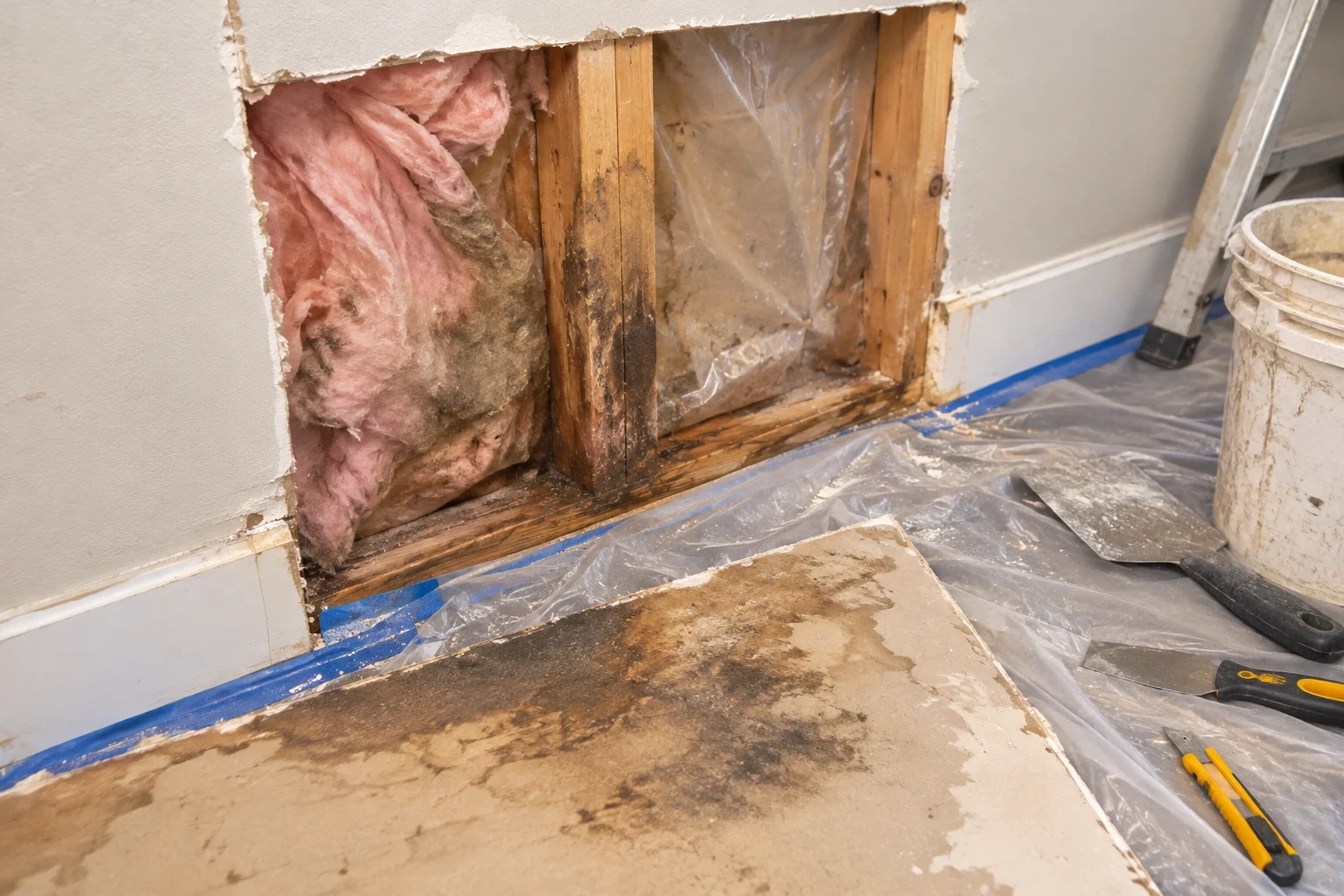
The real danger is the back of the board. The front gets air and light. The back faces a dark, closed wall cavity where water sits on the bottom plate and soaks upward. That is why a wall can look dry from the room and still be growing mold behind the paint.
Humid summers make this worse. In August, a wet wall cavity in a closed-up room may barely dry on its own, even with the windows open.
Can wet drywall be dried and saved?
Sometimes. It depends on how much water, what kind of water, and how long it sat. A spilled glass of water on a painted wall is nothing. A slow leak that dripped inside the wall for weeks is a different story.
Here is the rough rule we use on jobs. If the board got wet once, the water was clean, and it was dried within a day or two, it can often stay. If the board is soft, sagging, swollen at the bottom, or the paper is peeling away from the gypsum, it has lost its strength and should come out.
- Usually fine to dry in place: brief clean-water wetting, firm board, no stains spreading, dried quickly with fans and a dehumidifier.
- Usually needs replacing: board that crumbles when pressed, sagging ceiling drywall, paper delaminating, water that sat for days.
- Always cut out: drywall soaked by dirty water, like an overflowing toilet or a backed-up drain.
- Check behind it: any wall wet from inside the cavity, even if the face looks okay.
Signs mold is already growing behind the wall
You can't always see it. But the wall usually tells you something is wrong if you know what to look for.
If you notice any of these after a leak, don't paint over it. A fresh coat hides the stain for a few months and the problem keeps growing underneath.
- A musty, earthy smell that is strongest near one wall or corner
- Yellow or brown stains that keep coming back through paint
- Paint bubbling, peeling or cracking in one spot
- Small gray, green or black specks, often near the baseboard
- Board that feels soft or cool to the touch compared to the rest of the wall
What we do when wet drywall has to come out
First, the water source has to be fixed. We don't patch a wall over a leak that is still active. Once it's stopped, we open the wall and look at what's really there before giving you an answer.
We cut back past the stained or soft area to clean, dry board, usually to the nearest studs so the new piece has solid backing. We check the framing and insulation behind it. Wet insulation holds water like a sponge and has to go. If the studs are damp, we let them dry fully before anything gets closed up.
Then it's standard wall repair: new drywall, tape, mud, sanding and texture matching so the patch blends with the rest of the wall, followed by a paint touch-up or a full repaint of the wall. We keep a clean work area with plastic and drop cloths, since old wet drywall is messy to remove.
One honest note. If mold covers a large area or has spread through a whole room, that is a job for a mold specialist first. We'll tell you if we see that, and we can do the drywall work once the area is cleared.
Keeping repaired walls dry for the long haul
A good repair should last as long as the wall around it. That only happens if the moisture doesn't come back. Most repeat damage we see is from the same small source that caused the first problem.
Bathrooms, kitchens, laundry areas and basements are where we see it most. A few habits go a long way: run the bath fan during and after showers, keep caulk around tubs and sinks in good shape, and look under sinks every few months. In older homes, check ceilings below upstairs bathrooms for faint rings. Catching a small stain early means a small patch instead of a full ceiling repair.
More questions about wet drywall
Can I just paint over a water stain?
Only after you know the board is dry and solid and the leak is fixed. Then a stain-blocking primer goes on first, or the stain will bleed through regular paint.
Does mold-resistant drywall stop mold completely?
No. It resists mold better than standard board, which makes it a good choice in bathrooms and basements. It still can't fix a wall that stays wet.
Is wet ceiling drywall more urgent than a wall?
Yes. Wet ceiling board gets heavy and can sag or come down. If a ceiling is bulging, keep people out from under it and get the water stopped.
Should I run fans and a dehumidifier right away?
Yes. Moving air and pulling moisture out in the first day or two is the best thing you can do. It may be the difference between drying a wall and replacing it.
Not sure if your wet wall can be saved?
Tell us what happened and what the wall looks like now. We'll talk through whether it sounds like a dry-out or a replacement and set up a time to come look at it in person.